Put a Bow on It: The Complete Guide to Bottling Cocktails at Home
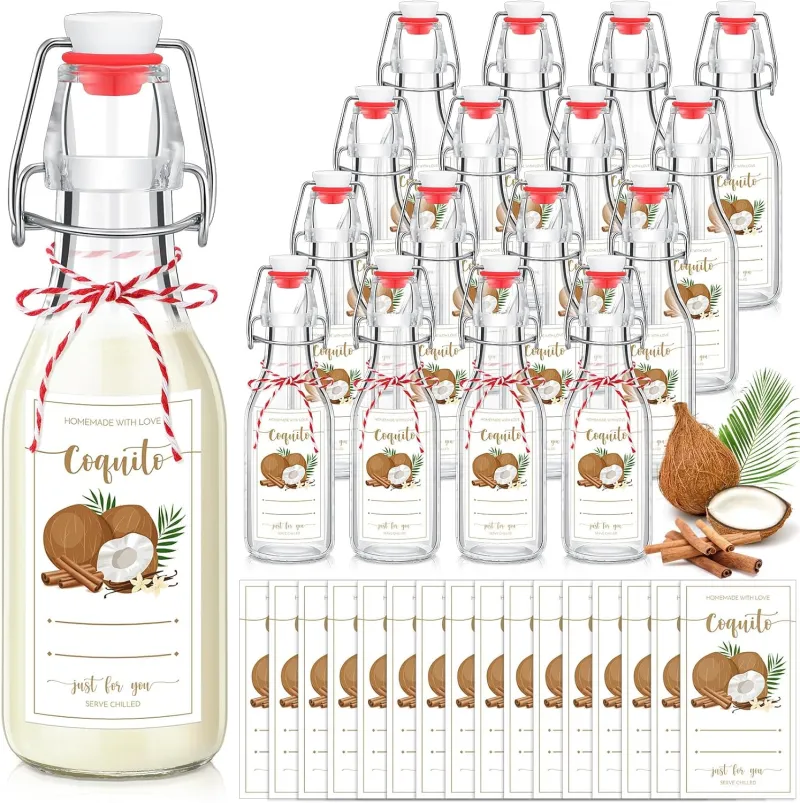
Photo: homemade bottled cocktails in glass bottles with handmade labels gift, via m.media-amazon.com
Walk into any decent liquor store in America this season and you'll see them: beautifully labeled bottles of Negronis, Manhattans, and Old Fashioneds, sitting on shelves at prices that would make your bartender blink. The ready-to-drink bottled cocktail market has exploded, and gift guides are full of them. There's just one problem with buying one: you could have made something better at home for a third of the price.
Bottling cocktails is one of the most satisfying projects in home mixology. It looks impressive, it travels well, and it turns a ten-minute drink into a gift that keeps for months. Here's how to do it right.
The Golden Rule: No Fresh Juice
Everything about bottled cocktails flows from one principle: citrus juice is the enemy of shelf stability. Fresh juice oxidizes, ferments, and turns bitter within days. Every properly bottled cocktail you've ever bought is either spirit-forward (no juice) or uses a stabilized citric acid solution.
Start with spirit-forward stirred drinks. These are the naturals:
- Negroni
- Manhattan
- Old Fashioned
- Boulevardier
- Vesper
- Bamboo
Notice the pattern? All spirit, sugar, and aromatized wine. All delicious at room temperature or fridge-cold. All practically immortal.
The Dilution Math
Here's where most first-timers go wrong. When you batch a cocktail for the fridge, you have to add the water that stirring would have contributed — otherwise the drink tastes hot, sweet, and unbalanced straight from the bottle.
The standard rule: stirring adds roughly 20–25% of the total volume in water. So for a single Negroni (2 oz gin, 1 oz Campari, 1 oz sweet vermouth = 4 oz), you'd add about 0.8–1 oz of water when batching.
For a full 750ml bottle, scale accordingly: build the recipe at roughly 6.5 drinks' worth of ingredients, then top with about 5 ounces of filtered water. If you plan to serve your bottled cocktail over a big cube or with a splash of soda, dial the water back slightly — you'll get more dilution at service.
Taste before sealing. If it tastes a little too strong neat, it's perfect. Bottled cocktails should be slightly over-built, because they'll be consumed without the benefit of a final stir.
Bottles, Seals, and Sanitation
You don't need fancy equipment, but you do need clean:
- Use glass bottles with tight seals. Repurposed whiskey bottles work if the cap seals well; swing-top bottles are ideal. Run everything through the dishwasher on a hot cycle.
- Funnel carefully. A small stainless funnel and a steady hand prevent the sticky crime scene that ruins the whole aesthetic.
- Leave headspace. Fill to the shoulder of the bottle, not the cap. Alcohol expands slightly with temperature swings.
- Sanitize like it's kombucha. A quick rinse with unflavored vodka or a no-rinse sanitizer gives you peace of mind, especially for gifts.
Refrigerate anything containing vermouth, amaro, or sherry once opened — and tell your gift recipient the same. A bottled Negroni is shelf-stable for months unopened and weeks in the fridge once cracked.
The Label Is Half the Gift
Let's be honest: half of why bottled cocktails make great gifts is the presentation. A plain mason jar says "I made too much punch." A labeled bottle with a handwritten tag says "I am a person of taste."
Include the essentials on your label: the drink name, the date bottled, serving instructions ("pour over one large cube, express orange peel"), and whether it needs refrigeration. A small ribbon or wax seal costs two dollars and transforms the whole package.
Leveling Up: Bottled Citrus Drinks
Once you've mastered the stirred classics, you can attempt the bottled sour. The trick is citric acid solution — a mix of citric acid, malic acid, and water that mimics lemon and lime without the perishability. Combine it with your spirit, syrup, and a touch of glycerin for texture, and you've got a shelf-stable Daiquiri. It's an advanced move, but it's the difference between a hobbyist and someone whose holiday gifts get requested in October.
The Bottom Line
A 750ml bottle of homemade Manhattan costs about $12 in ingredients and takes fifteen minutes to make. The store-bought version runs $30–45. But the real math isn't money — it's the look on someone's face when they realize you handed them a cocktail in a bottle, made by you, with a label you designed. That's not a drink. That's a flex.