The One Thing Pros Get Right That Home Bartenders Almost Always Miss: Dilution
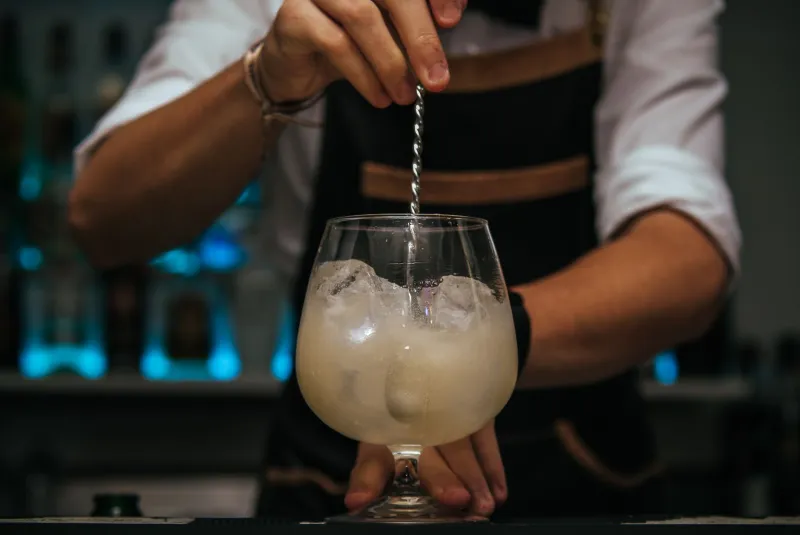
You've sourced the fancy spirits, nailed your ratios, and chilled your glass. So why does your cocktail still taste a little... off? The answer is almost certainly dilution — the quiet craft that separates a truly great drink from one that's just technically correct.
Most home bartenders spend serious time hunting down the right bourbon, the freshest citrus, or the most interesting amaro. And that's great. But then they shake or stir for whatever feels right, strain into a glass, and wonder why the drink doesn't quite sing the way it does at their favorite craft bar. The missing piece isn't a better bottle. It's water — and how deliberately you're adding it.
What Dilution Actually Does to a Cocktail
Water isn't an accident in cocktail-making. It's an ingredient — arguably the most important one you're not measuring. When you mix a drink over ice, you're doing two things simultaneously: chilling the liquid and dissolving water into it. Those two processes are inseparable, and together they fundamentally change how a cocktail tastes.
High-proof spirits carry a lot of ethanol, which can mask aromatic compounds and create a harsh, hot sensation on the palate. Adding water — through dilution — lowers the ABV just enough to let those aromatic molecules volatilize and reach your nose. In plain terms: a properly diluted cocktail smells better, tastes more complex, and feels smoother to drink. Under-dilute it, and the alcohol dominates. Over-dilute it, and everything goes flat and watery.
The sweet spot is narrow. And hitting it consistently is what professional bartenders train themselves to do.
Shaking vs. Stirring: Different Techniques, Different Dilution Profiles
Here's something a lot of people don't realize: shaking and stirring don't just affect texture — they produce different amounts of dilution at different speeds.
Shaking is aggressive. You're forcing ice and liquid into violent contact, which breaks down ice faster and introduces more water in a shorter period of time. A standard shake of around 10 to 15 seconds typically adds somewhere between 25% and 30% dilution to a drink. That's a significant amount of water, which is part of why shaken cocktails feel lighter and more refreshing — the dilution softens the edges and integrates the flavors quickly.
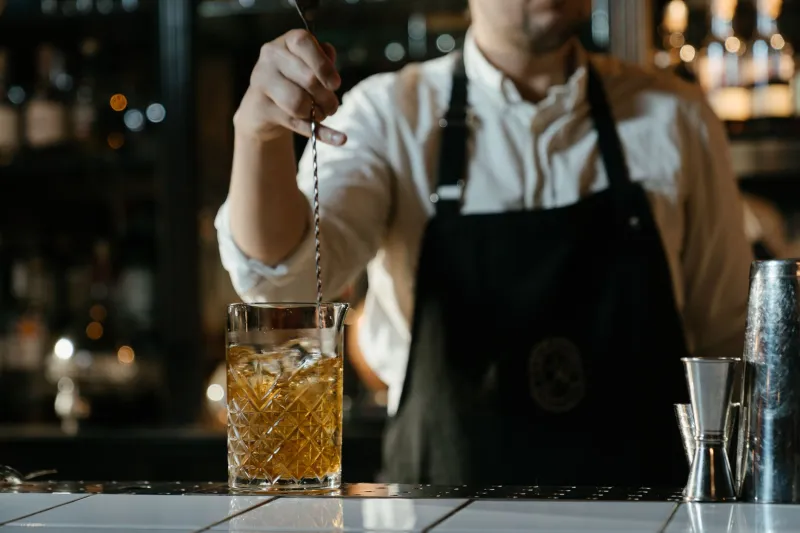
Stirring is slower and more controlled. A proper stir — 30 to 45 rotations with a bar spoon in a mixing glass full of ice — generally delivers around 20% to 25% dilution. It's gentler, which is why stirred drinks like Manhattans and Negronis retain a silkier, more spirit-forward character. The water integrates gradually, preserving more of the drink's density and mouthfeel.
Knowing this, you can start to see why the choice between shaking and stirring isn't just about tradition or texture. It's about controlling exactly how much water ends up in the final glass.
How the Pros Actually Calculate It
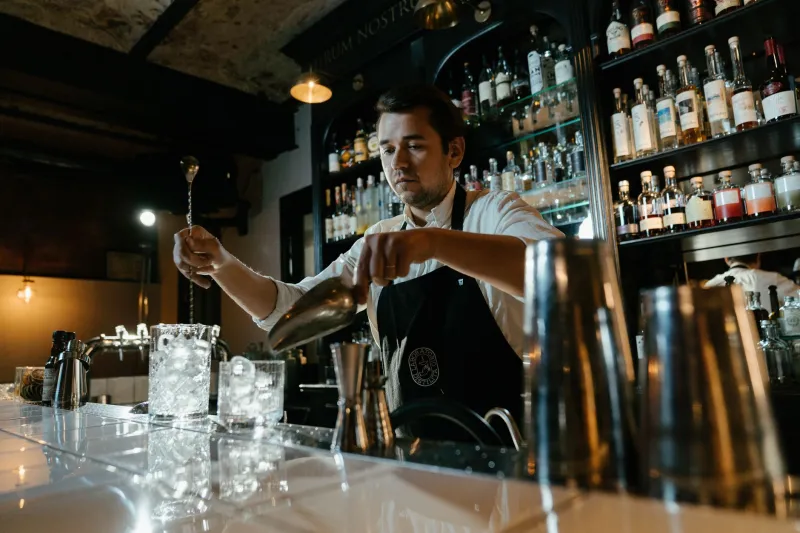
Professional bartenders in serious cocktail programs don't just eyeball their technique and hope for the best. Many of them work with target dilution percentages and adjust based on their specific ice, their mixing vessel, and even the temperature of the room.
A widely accepted target for most spirit-forward cocktails is around 20% to 30% dilution by volume. So if you're making a 3-ounce cocktail, you're aiming to add roughly 0.6 to 0.9 ounces of water through the mixing process. Some bartenders use a refractometer — a small optical tool that measures dissolved solids — to check dilution in real time. Others rely on carefully timed mixing and standardized ice.
For home bartenders, you don't need to go that deep. But a few simple habits can get you close:
- Use consistent ice. Large, dense cubes melt more slowly and give you more control. Cheap, hollow ice from a standard home freezer melts fast and dilutes unevenly.
- Time your technique. Count your stirs or your shake duration instead of going by feel. A 30-second shake is very different from a 12-second shake.
- Taste as you go. Before you strain, dip a clean spoon into the mixing glass and taste. Does it feel integrated and smooth, or does it still have a raw alcohol edge? Keep going if it does.
- Account for serving format. A cocktail served over a big rock will continue to dilute in the glass. A drink served up (no ice) won't. Factor that in when you're mixing.
The Ice Variable Nobody Talks About Enough
Your ice is doing more work than you think. The size, density, and temperature of your ice directly determine how fast dilution happens during mixing. A mixing glass packed with small, wet ice from a residential freezer will dilute a stirred drink much faster than the same glass packed with large, dry cubes from a dedicated ice maker.
This is why two bartenders using the exact same recipe and technique can produce noticeably different drinks — their ice is different. If you're serious about dialing in your cocktails at home, investing in a good ice tray that makes large, clear cubes is one of the highest-return upgrades you can make. Brands like Tovolo and True Cubes make molds that are easy to find online and at most kitchen stores across the US.
For mixing specifically, you want ice that's cold and dry — meaning it's been in the freezer long enough to firm up and lose surface moisture. Wet ice (ice that's starting to melt on the surface) dilutes drinks faster and less predictably.
What Happens When You Get It Wrong
Under-diluted cocktails are the most common mistake. They taste sharp, hot, and one-dimensional — you get the alcohol before you get anything else. The aromatics are suppressed, the sweetness feels cloying, and the finish is harsh. This is what happens when someone shakes for five seconds and calls it done.
Over-diluted cocktails are the opposite problem, and they're trickier because they can sneak up on you. The drink tastes fine at first — smooth, even pleasant — but there's no backbone. The flavors feel thin, the finish disappears immediately, and by the second sip, you're already bored. This often happens when someone stirs a drink for way too long, or when a shaken drink sits in the shaker for a minute before being strained.
The goal is a drink that feels alive — where the alcohol is present but not aggressive, the flavors are distinct but harmonious, and the finish lingers just long enough to make you want another sip.
Start Paying Attention to Water
Once you start thinking about dilution as an active ingredient rather than a side effect, everything about your cocktails will start to improve. You'll stir with more intention. You'll shake with a purpose. You'll taste your drink before you strain it instead of just hoping for the best.
The pros aren't using better spirits than you. They're using the same bottles you can find at your local Total Wine or BevMo. What they've mastered is the invisible stuff — the technique, the timing, the water. And that's something you can absolutely learn to do at home, one well-diluted drink at a time.