Water Is the Secret Weapon Your Cocktails Are Missing
Here's a thought that might mess with your head a little: the best cocktail you've ever had was probably somewhere between 20 and 30 percent water. Not spirit. Not syrup. Water. Plain, boring, taken-for-granted water — and it made everything taste better.
Most home bartenders treat dilution like a side effect, something to manage or minimize rather than something to actually pursue. But once you understand what water does inside a cocktail — chemically, physically, sensorially — you stop fearing it and start using it like the ingredient it actually is.
What Happens When Water Meets Whiskey
Let's start with the science, because it's genuinely interesting. Ethanol and water molecules don't just mix — they interact. Ethanol is actually attracted to water at a molecular level, and when the two combine, something called hydration clusters form. These clusters physically trap ethanol molecules, which does two important things: it softens the burn you feel on the palate, and it frees up aromatic compounds — esters, aldehydes, terpenes — that were previously bound up in the alcohol.
In plain English: water makes your drink smell and taste like more of what it's supposed to smell and taste like. That oak and vanilla in your bourbon? The botanical complexity in your gin? The herbal notes in your amaro? Dilution coaxes all of that forward. Without enough water, high-proof spirits can actually mask their own best qualities.
This is also why whiskey geeks add a few drops of water to a neat pour. It's not a nervous habit — it's chemistry.
The Problem With "Not Too Watered Down"
The fear of over-dilution is real, and it's not unfounded. A cocktail that's been shaken for 45 seconds or left sitting in a glass of melting ice turns thin and flat. Nobody wants that. But the overcorrection — shaking for five seconds, stirring for ten, using the smallest ice cube you can find — just swings the pendulum the other way. You end up with a drink that's harsh, unintegrated, and hard to actually enjoy.
The sweet spot is specific, and it varies by cocktail style. Here's a rough breakdown:
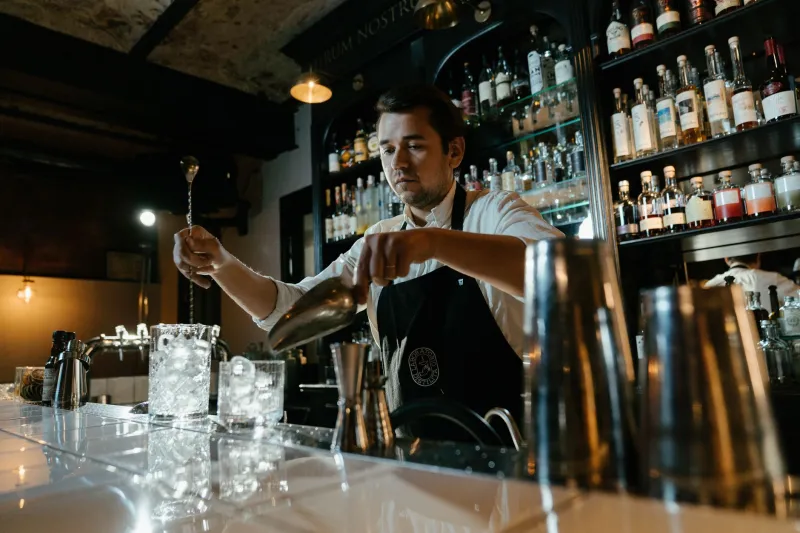
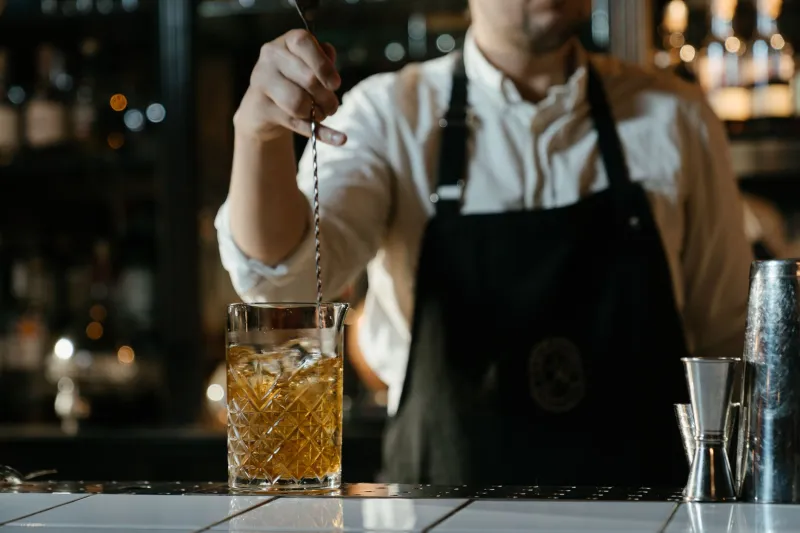
Spirit-forward stirred drinks (think Manhattans, Negronis, Old Fashioneds): These benefit most from dilution because they're all alcohol and no citrus to balance the proof. Target around 20–25% dilution by volume. For a typical 3-ounce stirred drink, that works out to roughly 0.75 to 1 ounce of water added through the ice during stirring — which takes about 30 to 45 seconds of steady, controlled stirring with large ice.
Shaken sours and citrus drinks (Daiquiris, Whiskey Sours, Margaritas): The acid in citrus does some of the heavy lifting that water handles in stirred drinks, so these need slightly less dilution. You're aiming for closer to 15–20%. A proper 10–15 second hard shake gets you there, especially with a standard cobbler or Boston shaker and a few large ice cubes.
Highballs and built drinks: These get their dilution from the mixer itself — your club soda, your tonic, your ginger beer. The ice in the glass keeps things cold and adds a small ongoing dilution as it melts, but you're not trying to hit the same targets as a stirred or shaken drink.
How Ice Changes the Equation
Not all ice dilutes at the same rate, and this is where a lot of home bartenders lose the thread. Small, cracked, or crushed ice has more surface area, which means faster dilution and faster chilling. Large, dense, clear ice — the kind you get from a directional freezing tray or a bought block — melts slower and dilutes more gradually.
For stirred cocktails, large ice is almost always the right call. You get more control, more time to taste and adjust, and a cleaner final dilution. For shaking, the size matters less because you're moving fast and the goal is immediate chilling — though larger cubes still tend to produce a cleaner result than crushed ice.
One more thing worth knowing: wet, slushy ice (the stuff that's been sitting in a warm cooler) dilutes dramatically faster than dry, hard-frozen ice straight from the freezer. If your drinks have been tasting thin at parties, this might be why. Keep your ice cold and dry until you're ready to use it.
Tasting for Dilution (Yes, You Can Do This)
Here's a skill that separates good home bartenders from great ones: tasting your cocktail mid-mix to gauge where it is. This sounds obvious, but most people don't do it.
With a stirred drink, stop about two-thirds of the way through your stir time and take a small sip directly from the mixing glass. A properly diluted cocktail will feel cohesive — the flavors knit together, the alcohol doesn't spike on your tongue, and the finish lingers in a pleasant way. An under-diluted cocktail will feel sharp and hot, with the alcohol dominating. An over-diluted cocktail will taste thin and flat, like the flavors are running away from each other.
With practice, you'll stop needing to count seconds or watch a timer. You'll just know.
One Simple Trick for Consistency
If you want to get precise — and plenty of people do — a kitchen scale is your best friend. Weigh your mixing glass before and after stirring or shaking, and you can calculate exactly how much water you've added. It sounds fussy, but it takes about ten seconds and it teaches you a lot about how your technique is actually performing. After a few weeks of this, you'll have a feel for it that doesn't require the scale at all.
The goal isn't to become a laboratory technician. The goal is to understand what you're doing well enough to stop leaving your cocktails to chance.
Embrace the Water
There's something almost counterintuitive about the idea that adding water makes a drink taste stronger — more complex, more expressive, more like itself. But that's what's happening when you dilute a cocktail properly. You're not watering it down. You're opening it up.
Next time you build a Manhattan or shake up a Daiquiri, give the dilution the same attention you'd give the spirit or the sweetener. It's not the most glamorous part of the process, but it might be the most important one.